Why Every Business Needs a Website (Even If You're on Social Media)
Every business needs a website to establish brand credibility, capture organic local search traffic, and maintain full ownership over their audience, not just social media profiles.
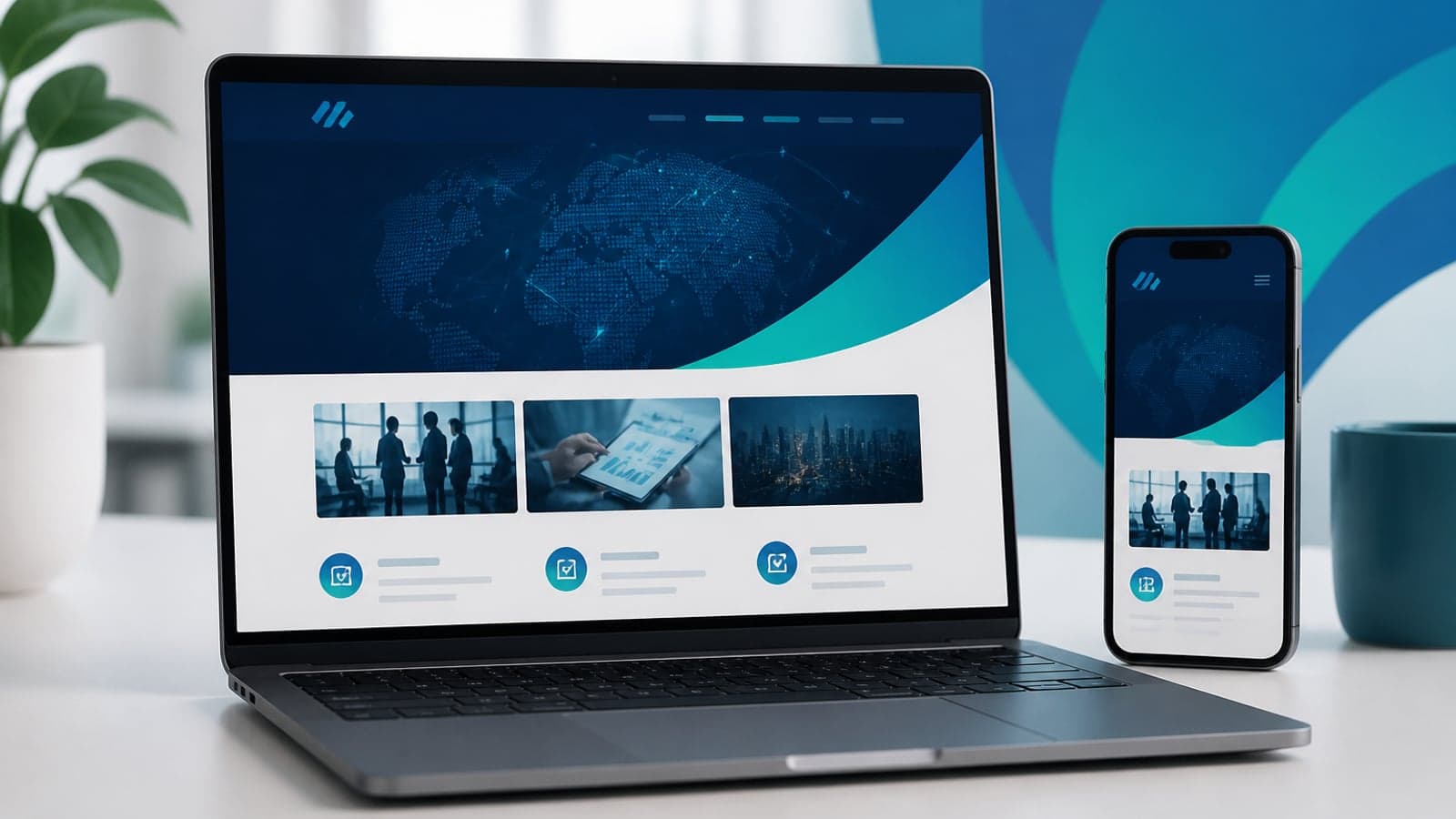
Imagine a potential customer hears about your business through a friend. They are interested, excited, and ready to buy. They pull out their smartphone, open their browser, and type your business name into Google to check your hours, location, or services.
And they find absolutely nothing. No link, no official menu, no digital anchor.
In today's market, that missing link is a massive red flag. For a modern consumer, a business that doesn't exist online barely exists at all. Many entrepreneurs fall into the trap of believing that a website is an expensive luxury reserved only for tech companies or massive e-commerce corporations. Others assume that an active Facebook page or an Instagram profile with a decent following is enough to get by.
The reality is that a website is no longer an optional marketing expense. It is the single most vital asset your business can own. It is your ultimate digital storefront, a non-stop lead generation engine that builds trust, drives local visibility, and works for you 24 hours a day, 7 days a week, 365 days a year.
Why Every Business Needs a Website: The Quick Answer
Every business needs a website to establish brand credibility, capture organic local search traffic, and maintain 100% ownership over their audience. Unlike social media channels with shifting algorithms, a professional website acts as a 24/7 digital storefront that converts passive searchers into paying clients.
Whether you run a local plumbing service, a boutique law firm, a corner bakery, or a growing B2B consultancy, here is exactly why your business needs a website to survive and thrive in today's competitive landscape.
1. Social Media vs. Website: The Danger of "Borrowed Land"
The most common objection from small business owners today is: "Why do I need a website when I have a free Instagram and Facebook page?"
It's a fair question on the surface. Social networks offer massive built-in audiences and require zero upfront financial investment to set up a business profile. However, building your entire digital presence exclusively on a social network means you are building your house on borrowed land.
Zero Platform Control
- Custom Branding & Layout
Vulnerable to Algorithm Changes
- Direct Audience Access
Fragmented Lead Data
- Immutable Data Ownership
When you rely solely on social media, you are entirely at the mercy of the platform's rules, changes, and monetization strategies. Consider what happens when:
The Algorithm Shifts: An organic algorithm tweak can instantly drop your reach from thousands of views to a mere double-digit handful, forcing you to pay for expensive ads just to get your content seen by your existing followers.
Account Glitches and Suspensions: False automated flags, hacker attempts, or simple system glitches can cause your profile to be shadowbanned or permanently suspended without warning. If that happens, your primary lead generation channel vanishes overnight.
Audience Demographics Move: A platform that is wildly popular today can lose its cultural relevance tomorrow as users migrate to newer apps.
A custom domain and an independent website provide digital real estate that you own entirely. You control the visual branding, the layout, the user experience, and most importantly, your data. No third-party corporation can change the rules on how you communicate with your clients, change your pricing structure, or shut down your store.
2. Establishing Instant Brand Credibility and Consumer Trust
Modern buyers are deeply analytical and naturally skeptical. Before they buy a product, hire a service provider, or visit a physical location, they seek digital validation to confirm that a company is legitimate, safe, and professional.
Studies show that over 75% of consumers admit to judging a company's overall credibility based purely on its website design. When a buyer searches for you and finds a polished, fast-loading, mobile-optimized site, it instantly projects an image of operational stability and professionalism.
Conversely, relying strictly on a basic social media profile signals to consumers that your operation might be a temporary side-hustle, a hobby, or unestablished. A professional website acts as a secure anchor for your brand credibility by allowing you to display critical trust elements in a structured, permanent format:
Verified Case Studies: In-depth proof showing exactly how your services have solved complex issues for past clients.
Embedded Social Proof: Aggregated, authentic reviews from platforms like Google Workspace and Yelp displayed directly on your homepage.
Official Credentials: Clear visibility for industry awards, business licenses, certifications, and secure payment badges.
Without a centralized hub to display these trust signals, you force potential clients to guess whether your business is authentic, driving them straight into the arms of competitors who already look established online.
3. Capturing Inbound Leads with Local SEO for Small Business
Word-of-mouth is an incredible tool for growth, but it is fundamentally limited by scale. To expand your client base consistently, you need a passive, automated way to attract individuals who are actively looking for the services you offer right now. This is where the power of local seo for small business plays a key role.
Every single day, millions of people search Google using high-intent transactional phrases, such as:
- "Best commercial accountant near me"
- "Emergency corporate IT support in Australia"
- "Affordable web development agency"
When you do not possess a target website optimized around these specific keyword strings, your business is invisible on the SERP (Search Engine Results Page). You miss out entirely on this highly lucrative organic traffic.
By employing smart search visibility strategies, such as building out dedicated landing pages for each service you offer and optimizing your site layout for mobile devices, Google can crawl, parse, and understand your business profile. This enables your company to appear directly in front of buyers at the exact moment they are holding a credit card and looking to make a purchase decision, transforming passive search queries into reliable inbound leads without a continuous ad spend.
4. Your Digital Storefront is Open 24/7/365
Your physical shop front, office, or phone lines might operate on standard 9-to-5 working hours, but modern consumer behavior does not conform to a schedule. People frequently search for solutions, research service providers, and look to make purchases late at night, early in the morning, or over weekends.
A corporate website acts as your most efficient, untiring employee. It never takes a sick day, never goes on vacation, and works continuously through the night to serve your audience.
With a functional digital storefront, your business can automate critical client interactions completely behind the scenes:
Lead Capture: Capturing contact details through forms and providing gated resources (like downloadable pricing guides or e-books) to build an active marketing database.
Instant Customer Service: Answering recurring client questions via structured FAQ sections or automated AI-powered chat assistants, saving your staff hours of manual support time.
Direct Booking Integration: Letting clients view your calendar availability, schedule appointments, or book consultations directly without playing phone tag.
By providing a self-service destination that functions around the clock, you eliminate friction from the customer journey, making it simple for people to interact with your brand whenever it is convenient for them.
5. Maximizing ROI on Advertising and Marketing
If you plan to run any digital marketing campaigns, whether that involves Google Ads, Meta campaigns, or local print media advertisements, having a dedicated web landing page is paramount to achieving a positive return on investment (ROI).
Driving paid advertising traffic to a generic social media business profile is highly inefficient. Social feeds are fundamentally designed to keep users distracted with infinite notifications, competing advertisements, and personal updates. If you send a paid visitor there, they are highly likely to get sidetracked and click away before ever making contact.
A website allows you to create highly targeted landing pages designed with a singular focus on conversion optimization. On your own site, you control the entire narrative. You can remove noisy sidebars, present a clear, sequential breakdown of your service's value proposition, and place distinct calls-to-action (CTAs) that guide the visitor effortlessly toward submitting an inquiry, scheduling a call, or buying a product. Additionally, a dedicated site allows you to embed tracking tags and analytics tools safely, giving you deep insights into user behavior so you can refine your marketing strategies and maximize your revenue.
6. Controlling Your Brand Narrative and Showcasing Social Proof
In the modern marketplace, if you don't actively define your brand narrative online, your competitors or public forums will do it for you. A website provides an authoritative space to shape how the public views your organization, your culture, and your quality of work.
Unlike social media feeds where your past projects and portfolio items get buried under newer updates within days, a website allows you to organize your best work in an structured, easily navigable showcase.
Furthermore, you can design intentional user pathways that blend high-quality portfolio images with compelling social proof. For example, a local remodeling business can build a clean "Before & After" project gallery, pairing it directly with a deep-dive testimonial from that specific client. This structured storytelling forms an emotional connection with prospective buyers that a scattered, chronological social media grid simply cannot replicate.
7. Debunking the Myths: "It's Too Expensive or Too Hard"
Despite the undeniable small business website benefits, many entrepreneurs delay launching their site because they are held back by outdated misconceptions. Let's dismantle the two biggest myths stopping business owners from getting started:
Myth 1: "Building a website requires advanced coding and programming skills."
The Reality: The modern web landscape is highly accessible. With powerful content management systems (CMS) like WordPress, you don't need to write a single line of code to manage an elegant digital hub. Intuitively designed visual builders and drag-and-drop systems allow anyone to update text, upload new portfolio pieces, and publish blog content easily.
Myth 2: "A professional business website is a massive financial burden."
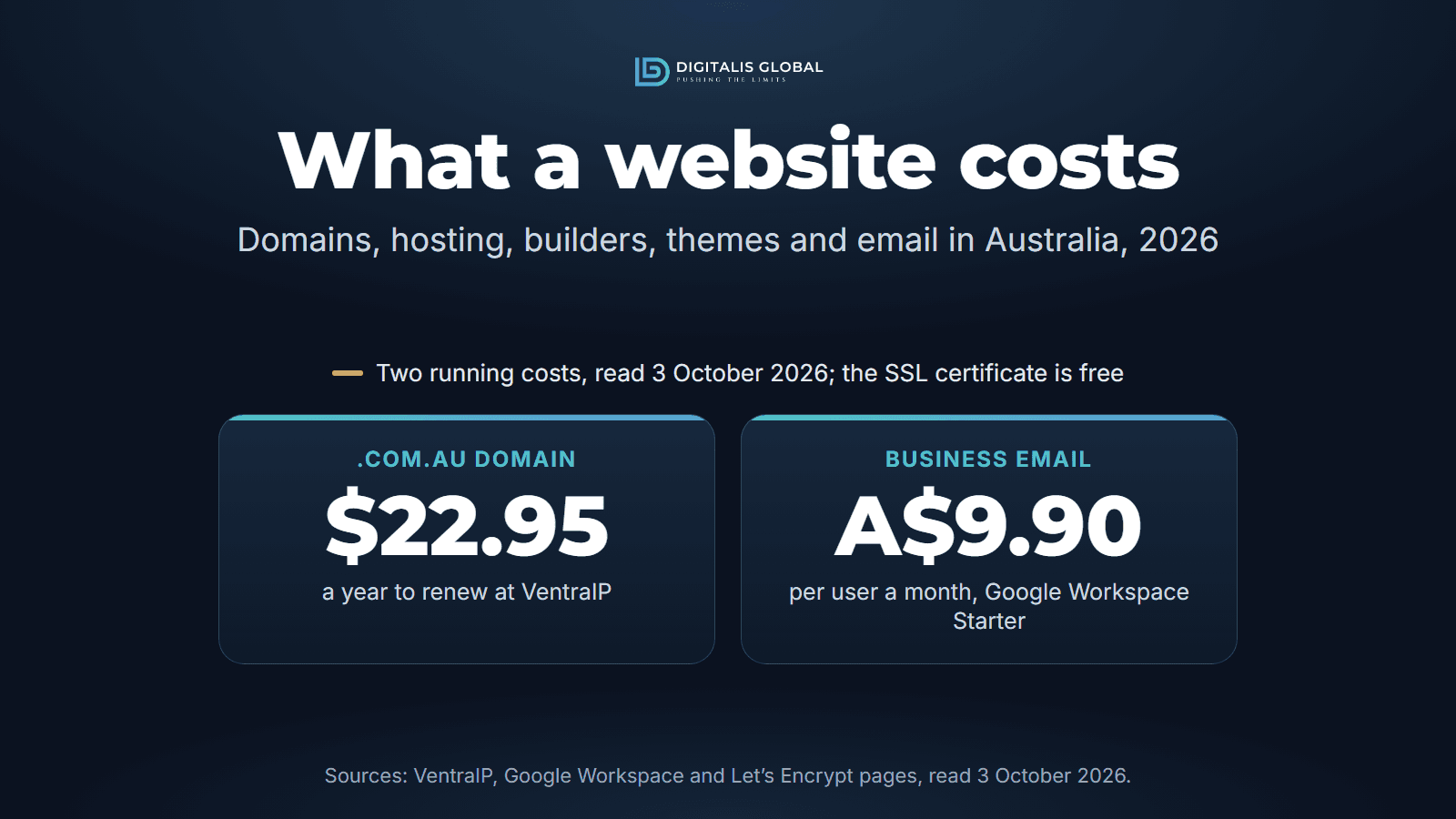
The Reality: Launching a basic, functional corporate website is incredibly cost-effective. Securing a custom domain name typically costs around $10 to $15 per year, and reliable business web hosting ranges from $5 to $15 per month. While hiring a professional developer involves an upfront design cost, the ongoing maintenance of a foundational site is remarkably budget-friendly.
8. Frequently Asked Questions (FAQs)
Can I run a successful business with just a Facebook or Instagram page?
While it is technically possible to launch a business using social profiles, sustaining long-term growth without a website is exceptionally risky. Relying entirely on social platforms leaves you vulnerable to algorithm drops, policy changes, and sudden suspensions, while making it much harder to capture highly lucrative search intent from Google.
How much does it cost to build a basic small business website?
The starting costs are very accessible. A custom domain name typically costs around $10 to $15 per year, and reliable business web hosting ranges from $5 to $15 per month. While hiring a professional developer involves an upfront design cost, the ongoing maintenance of a foundational site is remarkably budget-friendly.
Do service-based local businesses really need a website?
Absolutely. Local service providers (such as mechanics, electricians, and contractors) actually stand to gain the most from a website. When an unexpected emergency occurs, consumers do not browse social media channels; they look on Google for fast solutions near them. An optimized site ensures your local business is the one they find first.
9. Conclusion: The Real Financial Risk of Staying Invisible
Ultimately, deciding whether to build a website isn't just about modernizing your aesthetic. It is a critical financial decision. Every day your business remains invisible on search engines, you are actively giving away valuable market share, organic leads, and high-value customers to competitors who have already secured their digital real estate.
A professional website is more than just an informational page; it is your ultimate anchor for long-term brand credibility, a dynamic inbound marketing engine, and an automated assistant working tirelessly to scale your operations. Stop building your business on the borrowed land of social media networks. Take full control of your digital presence, establish your authority, and build an online foundation that ensures your company continues to grow for years to come.